

Overview legend
Overview legend
Introduction
Microsoft Dynamics 365 Business Central is a cloud ERP for small and medium-sized businesses, covering financials, operations, sales and customer service. Some operations need the Chift extension, available from Business Central version 23. See Connect Business Central.Activate Business Central
Partner keys
You’ll need your own OAuth2 app, registered with Microsoft. The app is registered in Azure. No approval from Microsoft is needed.1
Sign in to Azure
Sign in to the Azure portal as an admin. If you do not have an account yet, create a free one.Your tenant name appears in the top-right corner. If you have no tenant, create one.
2
Register the app
Go to App registrations and click New registration. Name the app, choose one of the Multitenant options depending on your needs, and register it.
3
Add the redirect URI
In the app, go to Manage › Authentication, click Add a platform, choose Web, enter the redirect URI below, and click Configure.
4
Grant the API permissions
Go to API permissions › Add a permission › Dynamics 365 Business Central. Under Delegated permissions, select
Financials.ReadWrite.All, user_impersonation and User.Read, then click Add permissions.5
Create a client secret
Go to Certificates & secrets › Client secrets and add a secret, with a description and an expiration date that suits you. Copy its value straight away. From Overview, copy the Application (client) ID.
6
Turn off assignment
In Enterprise applications, open the app and set Assignment required? to No.
Activate Business Central in your Chift account
In Connectors, enter your client ID and client secret.
Connector settings
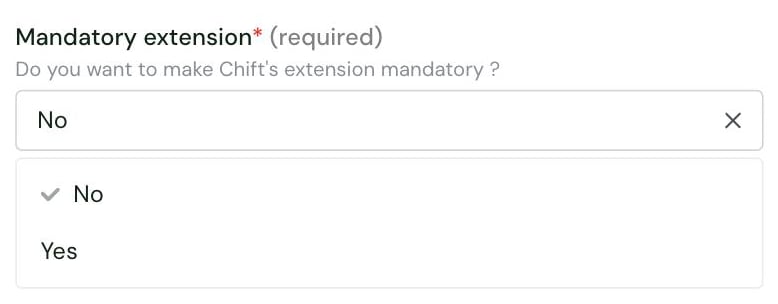
- No (default): connections are created without the extension. Operations that need it return
ERROR_CONNECTOR_MISSING_EXTENSION. - Yes: the connection fails when the extension is not installed, and the end user is asked to install it.
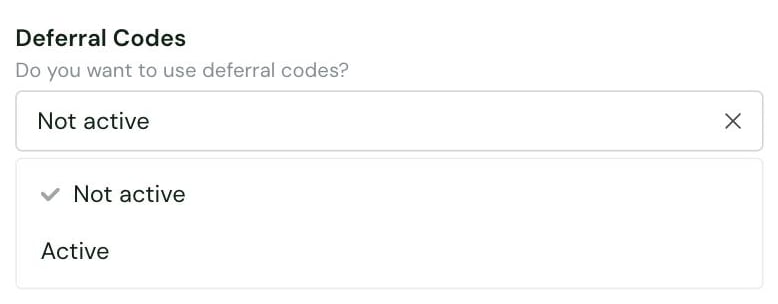
- Not active (default): no deferral code is applied.
- Active: the end user picks a deferral code while connecting. Chift applies it to the lines of every invoice sent with a start and end date.
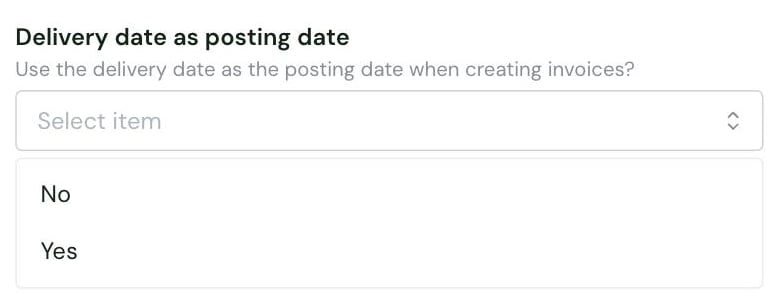
- No (default): the posting date is the forced financial period when one is sent, otherwise the invoice date.
- Yes: the posting date is the delivery date. It only applies to invoices sent with a delivery date.
Test Business Central
Vendor fees
No vendor fees, for you or your end users.
Connect Business Central
Business Central setup guide for end users
The full step-by-step, with screenshots.
- Business Central online (on-premises Business Central is not supported)
- a Microsoft account with access to their Business Central environment
- the Chift extension, for the operations listed below
- sign in with their Microsoft account
- grant your app access to their Business Central environment
- choose the Business Central environment, then the company to connect
- if you enabled the matching settings, choose a default analytic plan and a deferral code
Chift extension for Business Central
The extension gives access to data that Business Central’s standard API does not expose. It does not change how Business Central behaves. It is required to:- create invoices
- create and read journal entries
- read journal entry attachments
- create financial entries
- read outstandings
- match entries
- read and create bank accounts
- push bank transactions, from extension version 1.0.6
- create ledger accounts
- use deferral codes on sales and purchase invoices, together with the connector setting above
Bank transactions setup
If you push bank transactions, your end users need:- the extension in version 1.0.6 or later. Without the extension, the push returns
ERROR_CONNECTOR_MISSING_EXTENSION. With an older version, it returnsERROR_CONNECTOR_OUTDATED_EXTENSION. - a Bank Acc. Recon. Template Name and Bank Acc. Recon. Batch Name in General Ledger Setup, when their company makes journal templates mandatory. They set them once for the whole company.
Rate limits
Business Central applies OData limits per user, meaning the Microsoft account that authorized the connection.
When the limit is exceeded, Microsoft returns HTTP
429 Too Many Requests.
Chift automatically manages these limits to optimize performance and prevent interruptions. However, once the API rate limit is reached, Chift cannot bypass these limitations.
See Microsoft’s operational limits documentation.
Limitations & specificities
Invoices
Invoices
Status mapping: invoice statuses correspond as follows:
Direct to paid: depending on the vendor or customer payment configuration, an invoice can go straight to Paid when posted, skipping Open.For purchase invoices, this happens when the vendor’s payment method has a balancing account: Business Central then posts the payment together with the invoice. See Microsoft’s Settle purchase invoices promptly.
Chart of accounts & VAT
Chart of accounts & VAT
Detail accounts only: summary ledger accounts cannot be used in invoices or entries.One VAT posting group per request: all VAT codes in a request must belong to the same VAT posting group.First bank account: Chift cannot create the first bank account of a company. It needs an existing one to find the ledger account.The end user creates the first bank account manually in Business Central.VAT-exempt mode: Chift can post invoices and entries in VAT-exempt mode. The end user first completes the VAT-exempt invoicing setup in Business Central.You then pass one of two identifiers with the invoice data:
CHIFT_FREE_VAT_CODE: Chift omits the VAT code and lets Business Central’s Posting Group configuration resolve it. If set up correctly, it falls back to the 0% entry.- Your own VAT code: the identifier of the exact VAT Posting Group combination, if there are several exempt configurations.
Payments & matching
Payments & matching
Matching after a financial entry: matching only works immediately after the financial entry is created, while the batch is still unposted. Once the batch is posted, the standard flow can no longer match it.Instead, set the
automated_matching_number field when creating the financial entry: no separate matching call is then needed.Multi-folder
Multi-folder
One company per connection: a connection covers a single Business Central company, chosen by the end user when connecting.