Chift has two Unified APIs that both expose invoices: the Accounting API and the Invoicing API. They connect to different kinds of software. They do not return the same invoice. This page helps you choose the right one.

Two kinds of software
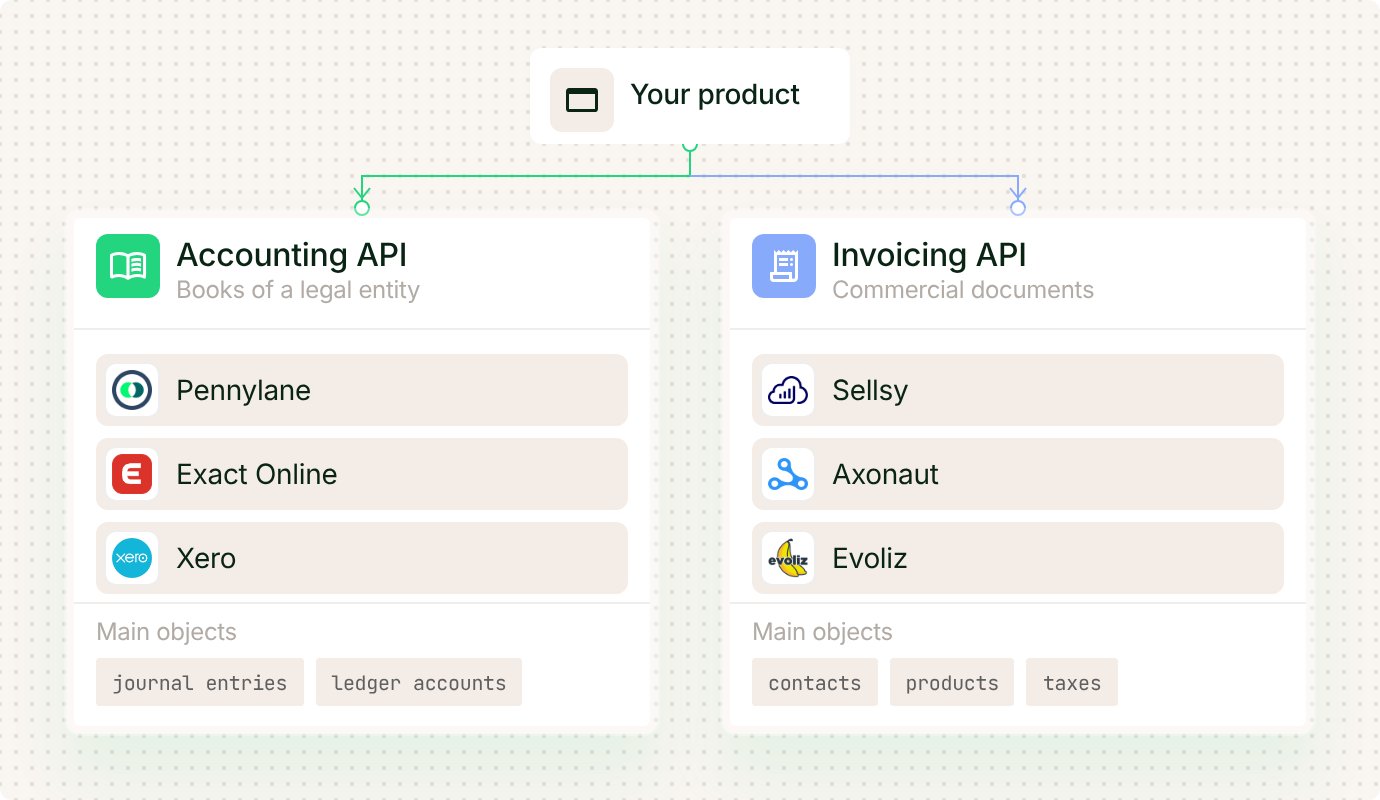
Your product calls two Unified APIs. The Accounting API connects to accounting software that keeps the books of a legal entity, for example Pennylane, Exact Online and Xero. Its main objects are journal entries and ledger accounts. The Invoicing API connects to invoicing software that issues commercial documents, for example Sellsy, Axonaut and Evoliz. Its main objects are contacts, products and taxes.

Accounting API and Invoicing API: two kinds of software, two APIs.

Accounting software keeps the books of a legal entity. An invoice in this software is a booked record: it debits and credits ledger accounts. Examples: Pennylane, Exact Online, Xero. The Accounting API exposes: Invoicing software issues and tracks commercial documents. An invoice in this software is a document sent to a customer or received from a supplier. Examples: Sellsy, Axonaut, Evoliz. The Invoicing API exposes: Some vendors offer both kinds. Chift lists them as separate connectors, for example Odoo (Accounting) and Odoo (Invoicing), or Sage 100 FR and Sage 100 Gestion Commerciale. You choose the API that fits your use case. You then offer your end-users the connectors of that API.

Which API to use

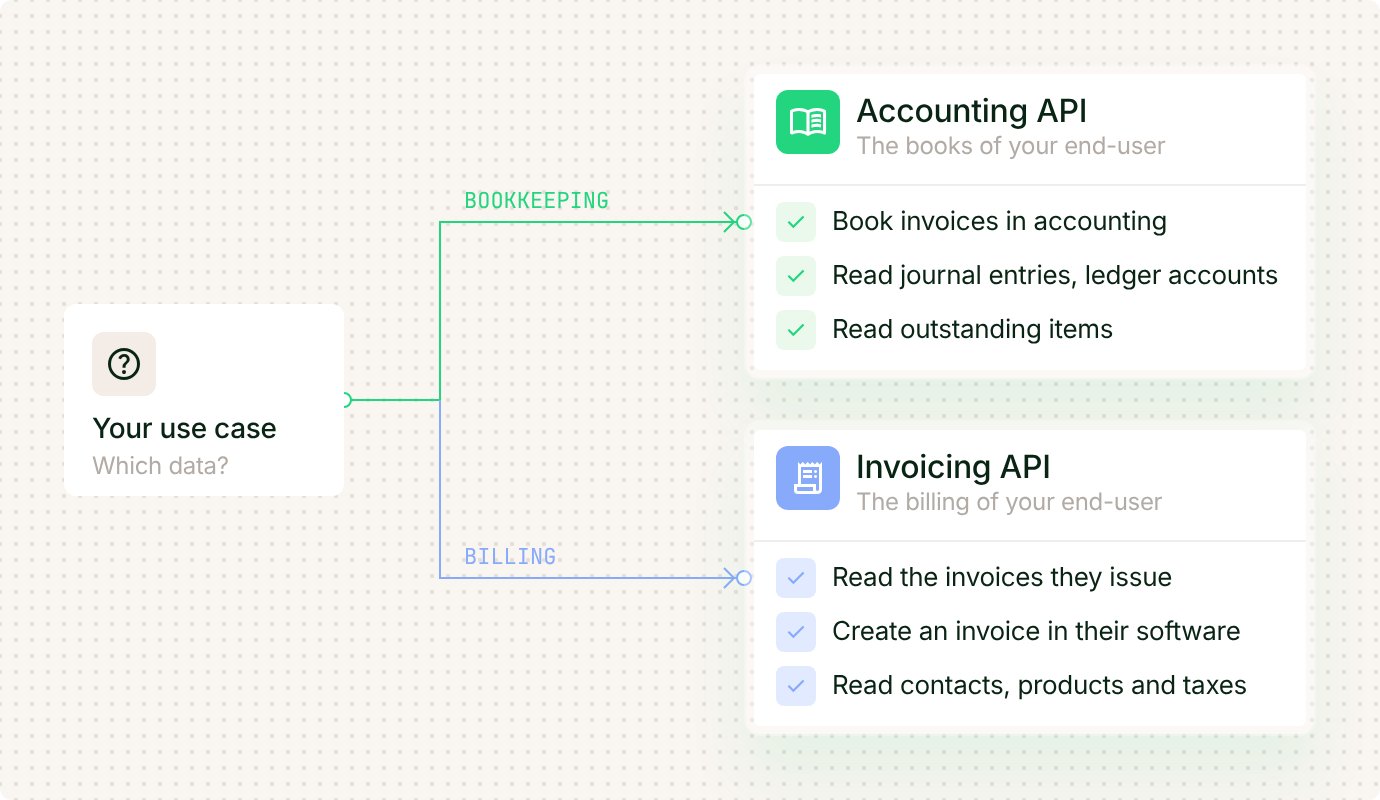
A decision from your use case to one of two APIs. For bookkeeping, use the Accounting API: book invoices in accounting, read journal entries and ledger accounts, read outstanding items. For billing, use the Invoicing API: read the invoices your end-user issues, create an invoice in their software, read contacts, products and taxes.

Choose the API from your use case.

Where to go next